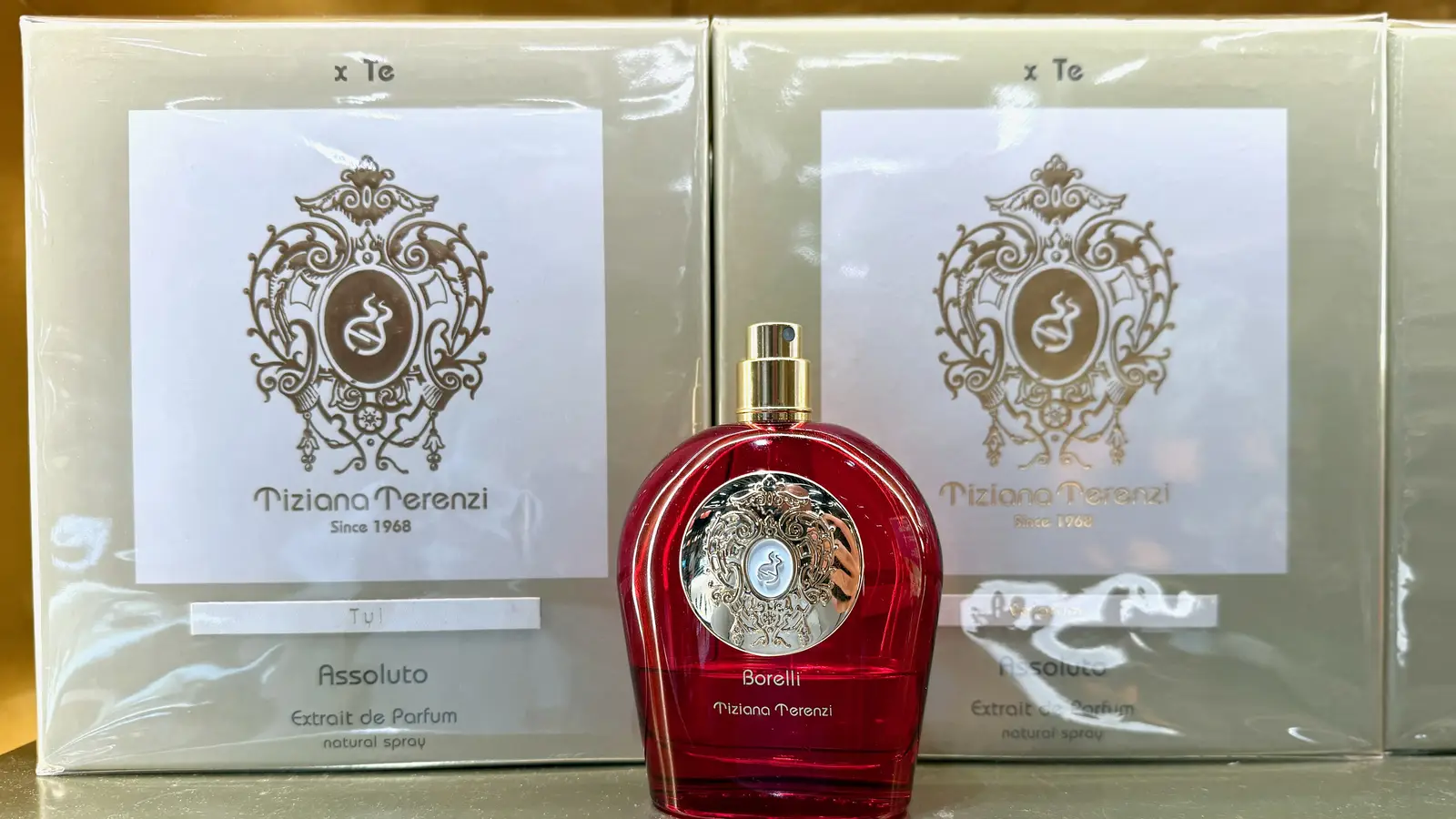
A customer rarely buys a fragrance they haven't smelled. The tester on your counter does that job, and it's the cheapest salesperson you will ever employ — as long as it stays a tester. Here is how we see accounts use them well.
What a tester is, and isn't
A tester is the same juice in the same concentration as the retail unit, packed for demonstration. It usually comes in a plain white or brown box marked “Tester” or “Demonstration”, sometimes without a cap, sometimes without a box at all. It is not a sample vial and it is not a cheaper version of the product.
What it is not, under any circumstances, is a retail unit. Most houses print “not for sale” on the tester box, and on our invoices testers sit on their own lines, labeled TESTER.
How many to carry
Our rule is up to one tester per six retail units of the same SKU. In practice, you need one tester for every fragrance a customer can pick up and smell — not one for every size.
| Facings on display | Testers | Why |
|---|---|---|
| 6 | 4–6 | Every fragrance on a small salon or barbershop shelf should be smellable. |
| 12 | 8–10 | Skip testers for sizes of a fragrance already open on the counter. |
| 24 | 14–18 | Best-sellers may need a second tester by December. |
If a fragrance sells fewer than one unit a month, its tester is costing you more than it earns. Move the SKU to a “by request” shelf behind the counter and put the tester toward a faster line.
Rotate and retire
Write the opening date on the base of every tester with a paint marker. Light and warmth at the counter wear down top notes faster than they would in a box, so a tester that has been open for a year rarely smells the way the sealed bottle will.
- Retire a tester at about twelve months open, or when it drops below a quarter full.
- Keep testers out of the window and away from spotlights.
- Replace a cracked atomizer the day you see it — a sticky nozzle loses sales quietly.
Keep testers off the retail count
The fastest way to break your stock count is to receive testers into the same SKU as retail units. Give each tester its own SKU in your point-of-sale system — many stores add “-T” to the retail code — and expense it when it goes on the counter.
A tester box should never go back on the retail shelf, and a tester should never be listed online as new. Marketplaces treat that as a condition violation, and customers who notice a missing cap or a plain box will tell everyone.
Key takeaways
- One tester per fragrance on display, not one per size.
- Date every tester and retire it at about twelve months.
- Separate SKUs for testers keep your retail count honest.
- On our invoices, testers are always on their own lines, up to one per six retail units.